
Сильная, атлетическая порода собак боксер может выглядеть запугивающе издалека, но вблизи они забавные, открытые и жизнерадостные собаки. И не забывайте об их очаровательном виляющем телом. Преданные и защитнически настроенные, боксеры отлично подходят в качестве домашних собак. Одно взгляд на их милые, похожие на человеческие глаза, и вы можете просто полюбить эту веселую, беззаботную породу.
- Снимок породы
- Лучше для
- Характер боксера
- Как заботиться о боксере
- Здоровье боксера
- История боксера
- ЧаВО
- Боксеры слюнявят?
- Какие самые популярные клички для боксеров?
- Основные выводы
- Поиск приютных боксеров рядом с вами
- Лучшие клички для боксеров
- Женские имена
- Обзор породы
- История боксера
- Общие проблемы со здоровьем
- Питание и питание
- Где усыновить или купить боксера
- Плюсы и минусы боксера
- Больше пород собак и дополнительные исследования
- Caring for a Boxer Dog
- Boxer Dog Health Issues
- Cancers
- Dilated Cardiomyopathy (DCM)
- Arrhythmogenic Right Ventricular Cardiomyopathy (ARVC or “Boxer Arrhythmia”)
- Gastric Dilatation-Volvulus (GDV)
- Hypothyroidism
- Cranial Cruciate Ligament Disease
- What To Feed Boxer Dogs
- How To Feed a Boxer
- How Much Should You Feed a Boxer?
- Nutritional Tips for Boxers
- Behavior and Training Tips for Boxer Dogs
- Boxer Dog Behavior
- Boxer Dog Training
- Fun Activities for Boxers
- Skin Care
- Coat Care
- Eye Care
- Ear Care
- Considerations for Pet Parents
- Boxer Dog Breed FAQs
- Are Boxers smart dogs?
- How long do Boxers live?
- Do Boxers shed?
- References
- They stay young at heart
- They actually do box
- They have the most unique smiles
- They can be stubborn
- They’re really just the sweetest, biggest couch potatoes
- A versatile breed
- The choice of movie stars
- In the club
- Show dogs
- Introduction to the Boxer breed
- History of the Boxer breed
- German Boxer vs American Boxer
- Early references to the name "Boxer"
- Theories on why Boxer dogs are called Boxers
- The role of the Boxer’s physical characteristics in the name
- The Boxer’s reputation as a fighting breed
- Influences from other languages and cultures
- Boxer’s in the workplace
- Military Dogs
- Police Dogs
- Guide Dogs
- The Boxer’s popularity and nickname evolution
- Famous Boxer dogs and their impact through history
- Boxer dogs in pop culture
- Boxer dog myths and misconceptions
- Common health problems for the boxer dog
- Conclusion
- Boxers Have a Long History
- Boxers Were Relatively Late Arrivals to America
- They Have Excelled in Dog Shows
- The Boxer Has a Mind of Their Own
- Boxers Are Lovers, Not Fighters
- They Have Their Own Distinct Antics
- Boxers Make Excellent Service Dogs
- A Pair of Movie Stars Loved Boxers
Снимок породы
Душа вечеринки
Лучше для
Энергичные и игривые боксеры хорошо себя чувствуют в семьях с активными родителями, которые могут обеспечить регулярные занятия спортом и играми, а также в домах с большим двором, где они могут размять свои ноги. Преданные и ласковые, боксеры цветут в общении с семьей.
Характер боксера
С их мускулистым телосложением и темными глазами, боксеры могут показаться суровыми и серьезными. Но не обманывайтесь! Способность завести много двуногих и четвероногих друзей — одно из главных достоинств боксеров. Дурацкие щенки по сердцу, они как ребенок в теле собаки, что, возможно, объясняет, почему боксеры так хорошо ладят с детьми. Они всегда будут радовать вас своими клоунскими трюками. Вы часто можете увидеть, как они сидят с задними лапами вперед и лениво приваливаются спиной в типичное для ленивой собаки положение. Они часто бегают взад-вперед и могут в любой момент остановиться, чтобы облизать вас. Если ваша мечта о собаке — это спортивная и ласковая порода, то боксер точно для вас.
Часто описываемые как более люди, чем собаки, боксеры известны своей чувствительностью. Они будут работать круглосуточно, чтобы угодить своим близким, но это стремление к угождению может привести к тому, что их могут обидеть. Исходно выведенные как сторожевые собаки, боксеры отлично себя проявляют в роли служебных, помощнических и терапевтических собак, а также в роли обнаружения наркотиков и поисково-спасательных работ. Тем не менее, некоторым боксерам может быть трудно подружиться с другими собаками того же пола, которых они не знают.
Как заботиться о боксере
Энергичные, игривые и чувствительные, боксеры требуют немало усилий в уходе и обучении. Но дополнительные усилия стоят того благодаря их доброму нраву и очаровательной личности.
Здоровье боксера
У боксеров средняя продолжительность жизни составляет 10-12 лет, но они также подвержены некоторым заболеваниям, которые могут ограничить их продолжительность жизни и подвижность. Это хорошо знать заранее, чтобы сохранить их здоровье на долгие годы.
История боксера
Спортивные боксеры, которых мы знаем сегодня, могут проследить свои корни в средневековой Германии. Они были получены от более крупной немецкой породы — Булленбейсер, или быковый кусатель, чье достоинство заключалось в охоте на свирепые звери, такие как медведи и дикие кабаны. Интересный факт: Древние предки боксера были военными собаками ассирийской империи и могут проследиться до 2500 г. до н. э. Имя боксер происходит от английских поклонников породы и указывает на то, как порода играет или защищает себя своими передними лапами, аналогично тому, как человек-боксер соревнуется.
Американский клуб любителей собак признал боксера в 1904 году, а родительский клуб породы — Американский клуб боксера — был создан в 1935 году. Боксеры были универсалами: они выступали в качестве атлетов, пастушьих собак, служебных собак, военных собак (в обеих мировых войнах), сторожевых собак, собак защитников и собак-проводников для слепых. Боксеры стали одной из самых популярных пород в Америке с 1950-х годов. Именно тогда собака по имени Бэнг Уэй выиграла на выставке собак Уэстминстер и стала известной во всей стране.
Если вы заинтересованы в том, чтобы боксер стал частью вашей семьи, стоимость варьируется от 800 до 2000 долларов за щенка чистокровного боксера. Важно проверить родословную и выбрать репутабельного заводчика, который проводит проверку здоровья. Вы также можете обратиться в организацию спасения боксеров для усыновления боксера, обратить внимание на породу в вашем местном приюте для животных или искать собак, готовых к усыновлению, в базе данных Chewy в вашем регионе.
ЧаВО
Нет, боксеры не считаются гипоаллергенными. Несмотря на то, что их шерсть короткая, они линяют. Хорошая новость в том, что им нужно мало ухода. Некоторые люди аллергичны к слюне собаки, и поскольку боксер чистит себя языком, слюна может попадать на их мех и в воздух при линьке.
Боксеры слюнявят?
Да, боксеры слюнявят. Из-за опущенной челюсти боксеры выделяют большое количество слюны. Большинство боксеров не слюнявят постоянно, но ожидайте избыточную слюну после физических нагрузок.
Какие самые популярные клички для боксеров?
Самые распространенные смеси боксеров:
Примечание: это не чистокровные собаки, а смешанные породы.
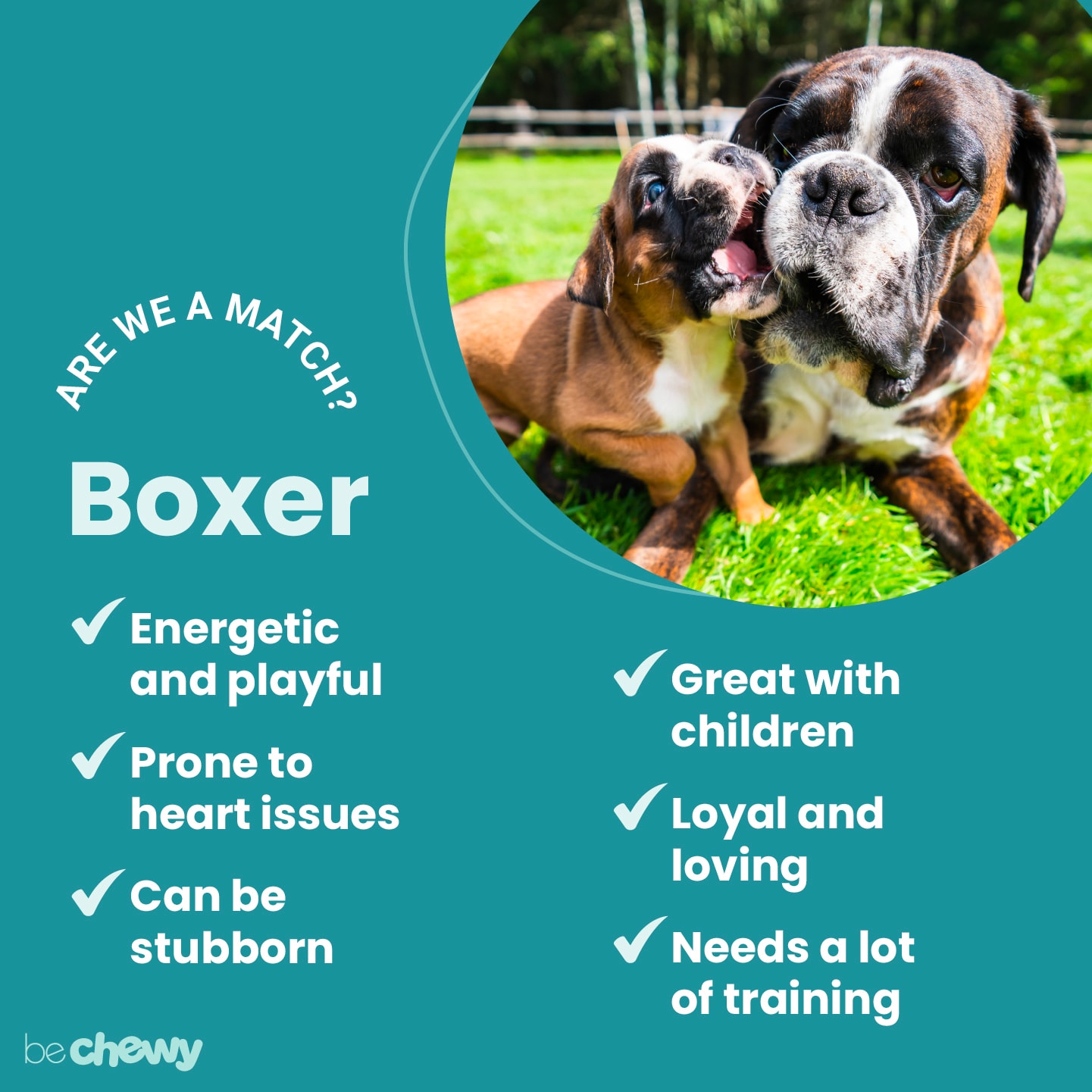
Основные выводы
Хотя для них требуется много ухода и внимания, черты характера боксера, такие как преданность, защитничество и забавление, делают понятным, почему боксер — одна из самых популярных пород в США. Боксеры красивы, дружелюбны и самые преданные спутники, который только может желать себе человек.
Жизнь с вашим боксером:
Руководство по кормлению щенка
Как научить собаку не лаять
Экспертное мнение предоставлено Гайем Фишером, заводчиком боксеров второго поколения и давним членом Американского клуба боксеров, а также доктором Сюзанн Каннингем, ветеринарным кардиологом и доцентом медицинского факультета имени Каммингса университета Тафтса.
Оценки породных характеристик предоставлены ветеринаром Сарой Дж. Вутен, DVM, CVJ, ветеринаром из ветеринарной больницы Шип Дроу в Грили, Колорадо; тренером и консультантом по поведению собак Ирит Блум, CPDT-KSA, CBCC-KA, CDBC, владельцем , в Лос-Анджелесе; и сертифицированным консультантом по поведению животных , CABC, в Шермане, Техас.
Здоровый контент был проверен медицинскими специалистами Chewy.
Поиск приютных боксеров рядом с вами
Введите свой почтовый индекс:
Лучшие клички для боксеров
Это лучшие клички для боксеров, выбранные владельцами домашних животных Chewy!
Женские имена
Боксеры любят своих людей больше всего, и это, безусловно, включает детей. Этот большой клоун имеет милый, игривый характер, который сочетается с их мускулистой конструкцией.
Из-за их высокой энергии боксеры нуждаются в тренировке и социализации с самого раннего возраста — иначе владельцам придется иметь дело с годами прыжков. Они также должны следить за своими собаками в экстремальной погоде из-за короткой шерсти и носа боксеров.
Обзор породы
- Рост: от 21 до 25 дюймов
- Вес: от 50 до 80 фунтов
- Шерсть: короткая, гладкая
- Цвет шерсти: обычно палевый, тигровый или белый, может быть черная маска и/или белые отметины
- Продолжительность жизни: от 10 до 12 лет
- Темперамент: активный, ласковый, игривый, энергичный
Нажмите Play для получения дополнительной информации о спортивных и дружелюбных боксерах.
Боксеры — хорошие семейные собаки, потому что у них обычно дружелюбный, игривый темперамент, и они любят одну вещь больше всего: людей. Они могут быть очень ласковыми, особенно к своим членам семьи.
История боксера
История боксера уходит корнями в 1800-е годы и немецкую породу собак по имени Булленбейсер, охотничью собаку достаточно крупную, чтобы противостоять крупной дичи (кабаны, быки и даже медведи). Эта порода потеряла свою популярность в конце века, и Булленбейсер позднее скрещивали с английским бульдогом и другими более мелкими породами, чтобы создать боксера, которого мы знаем сегодня.
Более стройный, меньший боксер распространился по всей Европе, а затем в Соединенных Штатах в конце 19 века. Эти преданные собаки использовались на фермах, как охранники, служебные собаки, а также в полиции и армии.
Клуб Американского кеннел-клуба признал породу в 1904 году, и сейчас боксеры занимают 16-е место в популярности среди пород собак в США.
Спортивные боксеры требуют большого количества физических нагрузок и внимания со стороны людей. Специальное обучение также необходимо, чтобы контролировать энергию породы. К счастью, по уходу за боксером нет необходимости в сложных процедурах.
Большинство боксеров обладают много энергии, что означает, что им нужно много физических упражнений каждый день. Идеально провести с боксером 30-минутную прогулку хотя бы дважды в день. Бег, походы, игры с мячом и другие активные игры также помогут собаке оставаться в форме и умственно стимулировать ее. Поскольку боксеры привязаны к людям, они предпочли бы заниматься чем-то активным вместе с вами, а не оставаться в одиночестве во дворе.
Имейте в виду, что боксеры не очень терпимы к холоду или жаре. Их короткая шерсть не защищает их от холода. И из-за их коротких носов боксеры не могут хорошо дышать в жару. Поэтому лучше заниматься боксерами в помещении во время экстремальных погодных условий, холоде или жаре. В жаркую погоду планируйте прогулки на самое прохладное время дня.
Поскольку у боксеров очень короткая шерсть, у них довольно простые потребности по уходу. Чтобы удалить лишнюю шерсть и загрязнения, еженедельно чистите их щеткой типа карри. Когда меняется погода весной и осенью, когда у собаки начинается выпадение шерсти, чешите их чаще, чтобы компенсировать увеличение лишней шерсти.
Куртка также остается довольно чистой, обычно требуя ванну только раз в пару месяцев. Но имейте в виду, что многие боксеры слюнявчики, поэтому их шерсть может потребовать небольшой уборки влажной тряпкой в области рта.
Стрижка когтей будет необходима примерно каждый месяц, в зависимости от того, насколько собака естественным образом затирает свои когти. Кроме того, идеально чистить зубы собаки ежедневно.
Боксеры могут стать гиперактивными и непослушными, если их не правильно обучать и социализировать. Это просто результат их вспыльчивых личностей. Боксеры часто любят прыгать на людей — это пережиток того, как порода прыгала во время охоты на дичь — и в идеале у них должно быть последовательное обучение с молодого возраста, чтобы пресечь это поведение.
Лучше всего начать занятия с боксеренком на классе щенков сразу, как только они соответствуют возрастным требованиям. Там они узнают основы послушания и как вежливо общаться с другими собаками и людьми.
Подвергайте вашего боксера разным людям и ситуациям, и убедитесь, что все, кто с ними встречается, использует позитивное подкрепление за хорошие поступки. Запись на соревнования с собаками, курсы служебных собак или подобные классы также могут помочь вашей собаке поработать над послушностью и укрепить вашу связь.
Общие проблемы со здоровьем
Помимо их непереносимости к экстремальным температурам, боксеры также подвержены некоторым обычным заболеваниям.
Некоторые считают, что в основном белым боксерам угрожают проблемы со здоровьем, но исследование боксеров в Великобритании не обнаружило существенной разницы в здоровье между белыми боксерами и темными шкурами.
Питание и питание
Более того, как и другие собаки с глубокой грудной клеткой, боксеры могут быть склонны к вздутию, что может привести к опасному повороту желудка. Питание из высокой миски, медленное питание и употребление пищи в меньших порциях могут помочь предотвратить вздутие.
Где усыновить или купить боксера
Посетите местные приюты для животных и спасательные группы породы, чтобы найти боксера, нуждающегося в доме. Поскольку порода настолько популярна, боксеров относительно легко найти. Если вы ищете щенка у уважаемого заводчика, ожидайте заплатить около $1,000 до $2,500, хотя это может сильно варьироваться в зависимости от родословной и других факторов.
Некоторые группы, которые могут помочь вам в поиске боксера, включают:
Плюсы и минусы боксера
Все еще не решили, подходит ли боксер вашей семье? Обратитесь к этому списку плюсов и минусов, чтобы помочь вам принять решение:
Больше пород собак и дополнительные исследования
Если вас интересуют похожие породы, ознакомьтесь:
Существует целый мир потенциальных пород собак — с небольшими исследованиями вы сможете найти ту, которую стоит принести домой!
Порода боксера была импортирована в Соединенные Штаты из Германии в 1930-х годах, согласно Американскому клубу боксеров, где они использовались для охоты. Эта история означает, что сегодняшние боксеры отлично бегают и играют в прыжки.
Boxers are deep-chested dogs that are usually well-muscled under their smooth coat. They are considered a medium-sized dog breed—weighing in around 65–80 pounds with an average height of 21–25 inches.
Caring for a Boxer Dog
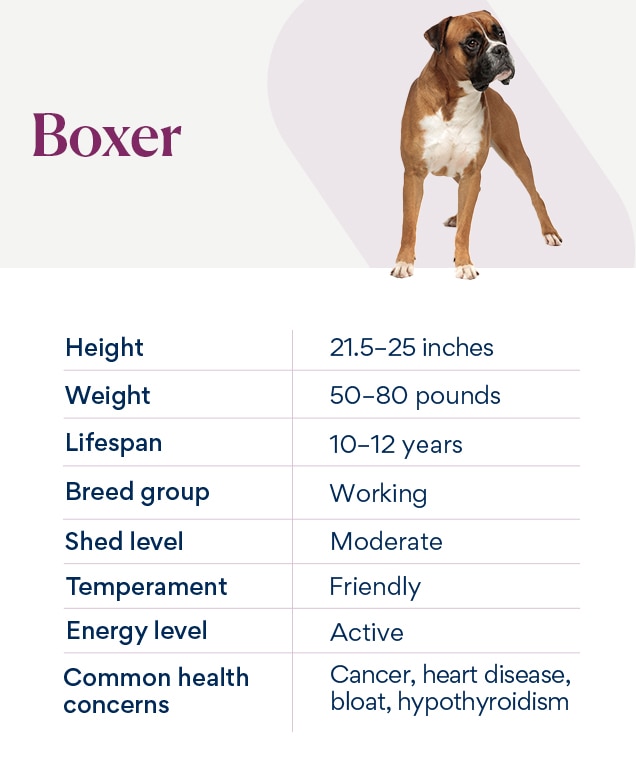
Their high-energy and spirited nature typically make Boxers good pets for active households. They require 30 minutes to two hours of exercise every day and, according to the breed club, can excel in dog sports such as rally, agility, and lure coursing. Providing enough exercise and mental stimulation is a big part of Boxer care.
But while Boxer dogs need lots of activity, they require very little grooming thanks to their short coat. Common Boxer colors include brindle, fawn, and white, and they can have white and black markings.
In the past, many Boxers had their ears cropped, but this trend has grown less popular in recent years and you will often see Boxers with floppy ears. The American Veterinary Medical Association (AMVA) opposes the procedure, as it’s done for cosmetic reasons and doesn’t have any proven health benefits.
Boxer Dog Health Issues
Photo credit: fotografixx/E+ via Getty Images
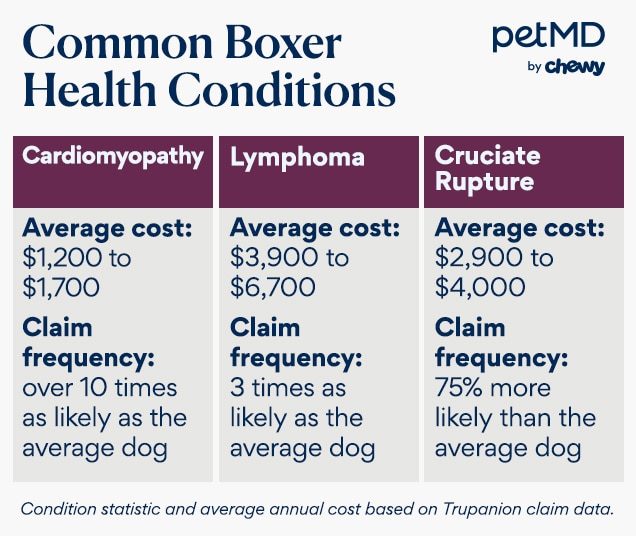
Boxers are prone to several health issues, so it’s important to talk with your veterinarian to have a strong preventative health routine in place. Pet parents may also want to invest in pet insurance when bringing home a Boxer puppy.
The typical Boxer lifespan is 10–12 years. They are a brachycephalic (flat-faced) breed, meaning that—along with the health issues listed below—they are prone to overheating and breathing issues.
Cancers
Cancer is one of the most common health conditions seen in Boxers. The types of cancer include:
Treatments vary depending on the type of cancer a Boxer develops. Surgery is often used to remove the affected tissue. Referral for consultation with a boarded veterinary oncologist may be recommended. Chemotherapy, immunotherapy, and/or radiation therapy may be recommended.
Dilated Cardiomyopathy (DCM)
Dilated cardiomyopathy (DCM) is degeneration of the heart that causes the muscle to become very thin and pump weakly. Symptoms can include weakness, collapse, cough, trouble breathing, and bluish gums. The symptoms of the disease may occur suddenly or progress gradually as the disease worsens over time. DCM can eventually lead to congestive heart failure.
A correlation between DCM and grain-free diets has been found but is not fully understood. Talk to your vet about the risks and benefits before feeding a grain-free diet to your Boxer.
Arrhythmogenic Right Ventricular Cardiomyopathy (ARVC or “Boxer Arrhythmia”)
ARVC is a genetic disease that affects the Boxer dog breed and, rarely, other breeds. This condition occurs when the normal heart muscle is replaced by fatty and fibrous tissue, causing abnormal electrical activity and therefore irregular heart rhythm.
ARVC varies in severity and many Boxers with ARVC live several years before developing symptoms. ARVC is treated using medications that control the abnormal heart rhythm (antiarrhythmics).
Gastric Dilatation-Volvulus (GDV)
Gastric dilatation-volvulus (a severe form of bloat in dogs) is a condition that occurs suddenly and requires immediate life-saving intervention. It occurs when the stomach fills up with food or gas, causing expansion and pressure.
The stomach can then rotate, which causes inadequate blood supply to the spleen and stomach. If not treated quickly, shock, tissue damage, and even death can occur.
Increased risk is seen in older dogs that have a deep chest (like the Boxer), dogs that are fed from elevated bowls, and dogs that are fed only once per day.
Immediate veterinary intervention is needed to stabilize and treat GDV. Initially, fluid therapy, oxygen therapy, and decompression of the stomach may be performed. Surgery is required to return the stomach to the right location and secure it in place (gastropexy). A gastropexy can also be performed preemptively to secure the stomach in the right position and prevent GDV from occurring.
Hypothyroidism
Hypothyroidism is a condition that causes the thyroid gland to be underactive. The thyroid gland controls the metabolism. In hypothyroidism, the body either attacks its own glands or the gland is replaced with fat.
Hypothyroidism is diagnosed using blood work. It’s treatable with a thyroid hormone replacement medication called levothyroxine, which will be a lifelong medication.
Cranial Cruciate Ligament Disease
The cranial cruciate ligament (CCL) is an important ligament that stabilizes the knee. In humans, this is known as the anterior cruciate ligament (ACL). The CCL can break down over time due to degeneration, genetics, obesity, and skeletal/joint conformation. When this ligament breaks down, it’s at risk of tearing, which destabilizes the joint.
Surgery is typically required to stabilize the knee. Dogs that have had a CCL tear in one knee have a 40–60% chance of tearing the other CCL. Maintaining a lean body condition helps prevent CCL disease, as excess weight adds to the breakdown of the ligament.
What To Feed Boxer Dogs
Feeding a commercial kibble or wet food approved by the Association of American Feed Control Officials (AAFCO) is a good way to make sure a Boxer receives a complete and balanced diet.
Boxers need quality protein for healthy muscles, including the heart. Additionally, omega-3 fatty acids (DHA/EPA) support healthy skin, coat, kidneys, and heart.
How To Feed a Boxer
Adult Boxer dogs thrive on being fed two meals per day, about every 12 hours. Using slow feeder bowls can help slow your Boxer down when they eat, which can help prevent bloat and GDV. Do not feed a Boxer from raised food bowls; this can increase the risk of bloat.
Boxer puppies need to eat more frequent meals, about three or four per day.
How Much Should You Feed a Boxer?
Just like humans, the recommended caloric intake varies between individuals due to differences in size, metabolism, health, and activity level. The best way to determine how much to feed your Boxer is to talk with your veterinarian and consult the feeding guide labels on your chosen dog food.
Maintaining a healthy weight is very important for protecting a Boxer’s joints.
Nutritional Tips for Boxers
Boxers can also benefit from the addition of omega-3 fatty acids (DHA/EPA) into their diets. Omega-3 fatty acids can be found in skin and joint supplements, fish oil, and even in some specially formulated dog foods. These fatty acids will act as natural anti-inflammatories that help to support the skin, coat, kidneys, joints, and heart.
Never give your dog supplements without talking to your vet first.
Behavior and Training Tips for Boxer Dogs
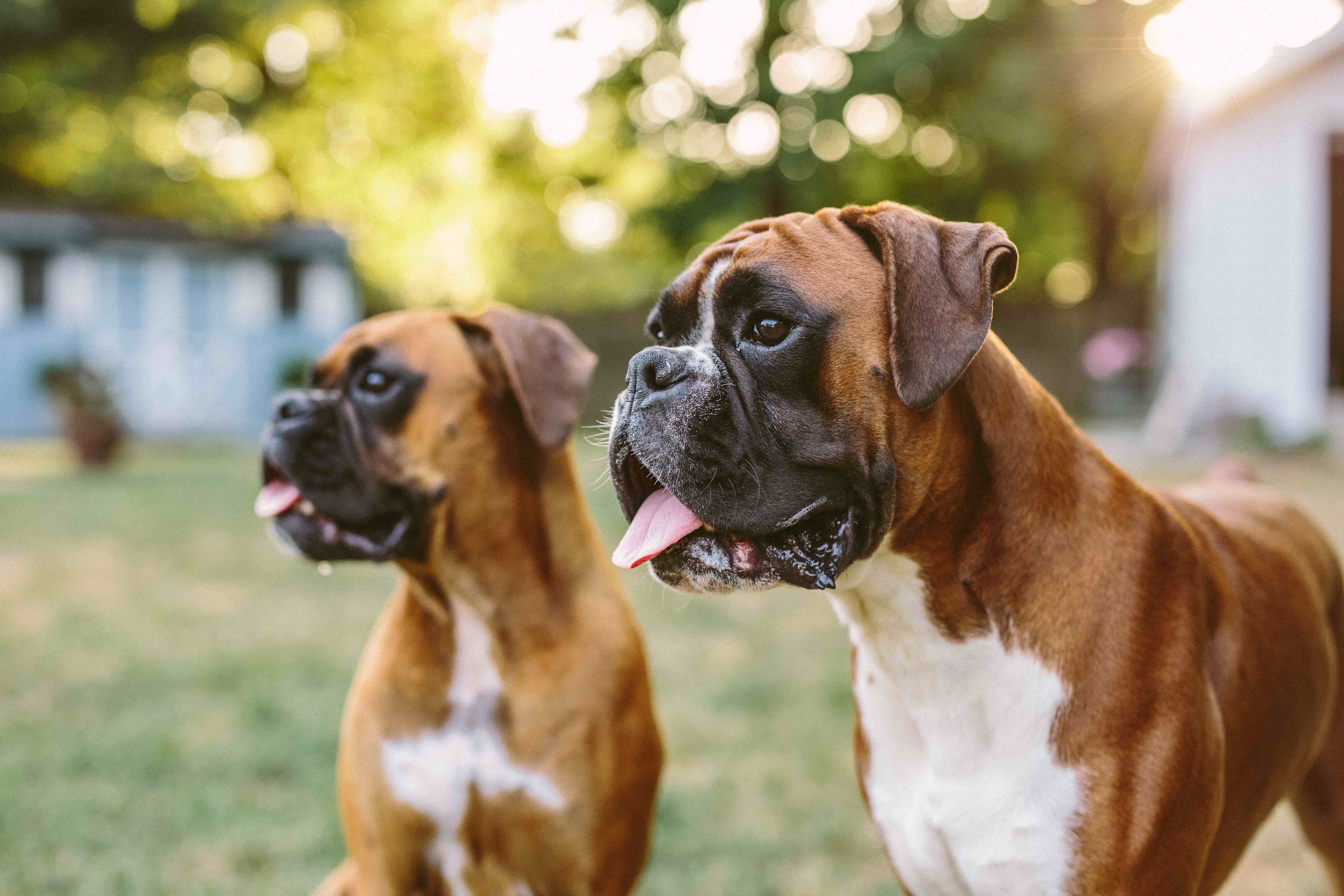
Photo credit: Adobe/Rod
Boxers are happy, playful dogs with a lot of energy. They are known to jump and paw when they play, so teaching them to stay down is beneficial. Because of their tendency to jump, Boxers may not be the best breed for families with young children unless they’re well trained to keep all four paws on the ground.
Boxer Dog Behavior
Because of their history as hunting dogs, Boxers have a prey drive and can be tempted to chase after birds and small mammals. They should be kept on a leash or inside a fenced-in space whenever they’re outside, and introductions to smaller pets like cats must be done properly and slowly.
Many Boxers enjoy digging in the yard and may even tunnel under a fence. Supervision is important when your pup is outside.
Early leash training can help stop your dog from pulling on the leash while walking, which is common in Boxers.
Boxer Dog Training
Boxers are very intelligent and trainable, but they often require patience due to their high energy level. They will learn if given clear and consistent guidance through positive reinforcement training.
Socializing Boxer puppies at an early age is incredibly important, as it will help your pup grow into a confident and polite dog that’s not fearful around new people, animals, and situations.
Fun Activities for Boxers
The Boxer is a relatively low-maintenance dog breed when it comes to grooming.
Skin Care
Boxers do not require any special skin care treatment. You can include omega-3 fatty acids in their diet to help support their skin and coat with your veterinarian’s guidance.
Contact your vet if you notice any changes in your dog’s skin.
Coat Care
Boxers have a short coat that sheds moderately. To keep their coat as healthy as possible, consider brushing them weekly. Boxers can be bathed monthly, if needed, or less frequently if they are keeping themselves clean.
Eye Care
The Boxer breed does not have any special eye care requirements. Schedule a vet appointment if you notice any changes in your dog’s eyes such as discharge, redness, or cloudiness.
Ear Care
To keep your Boxer’s ears healthy, it’s recommended to clean their ears twice a month to prevent infections. Use a veterinary-approved ear cleaner.
Considerations for Pet Parents
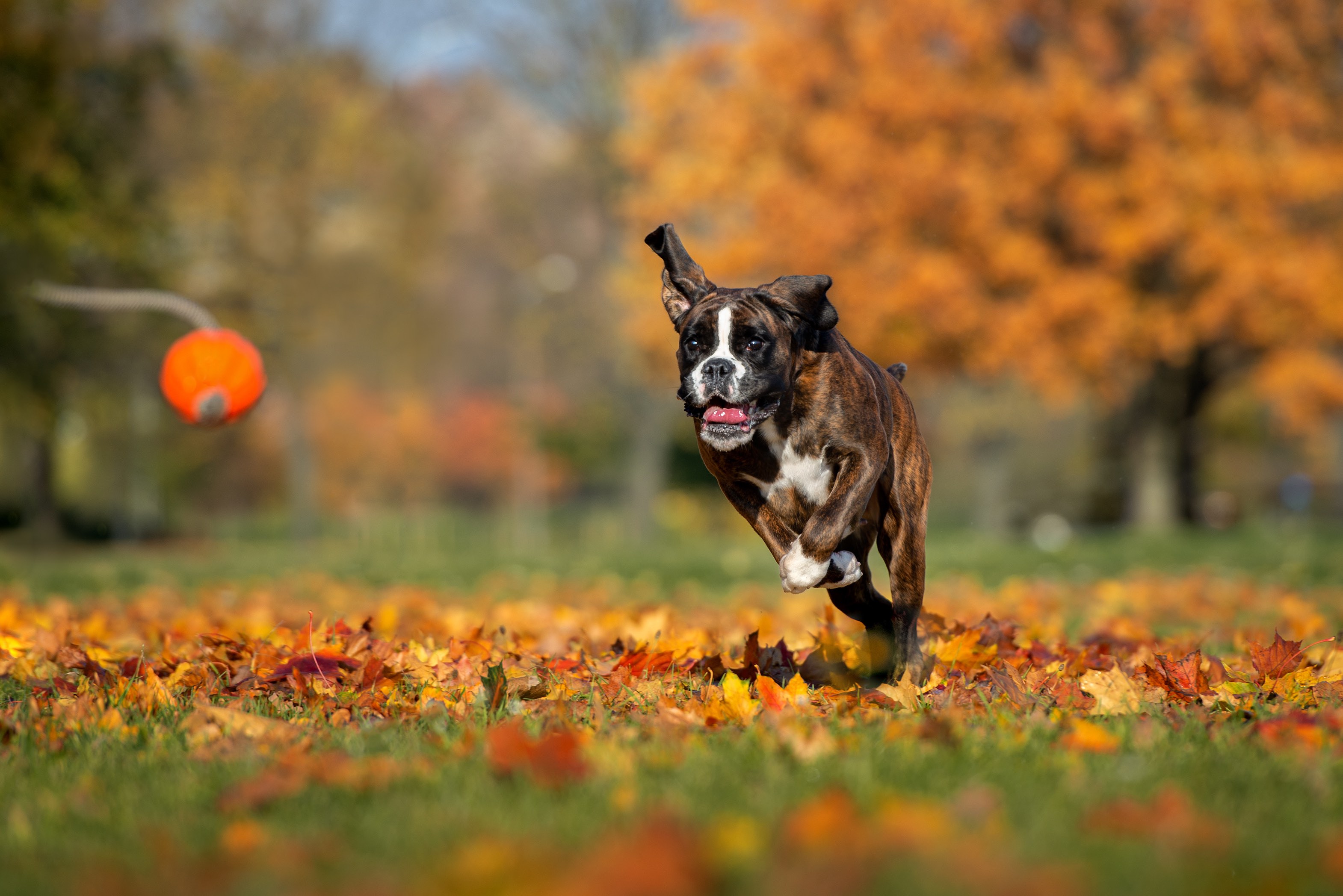
Photo credit: Adobe/otsphoto
Healthy Boxers should still have a physical examination with a veterinarian at least once a year. Boxers are predisposed to several heart conditions, including dilated cardiomyopathy and Boxer arrythmia, among others. The breed must be monitored for signs of exercise intolerance, lethargy, or coughing, as these could be signs of a developing heart condition.
Boxers should also be regularly monitored for skin tumors, as these may be cancerous. Additionally, signs of internal cancer may include lethargy, decreased appetite, weakness, or weight loss.
Boxers are a high-energy dog breed known for bouncing around. Therefore, they are not the most ideal dog breed for households with young children, frail individuals, or senior adults who can be knocked down easily.
Boxer Dog Breed FAQs
When well-socialized at an early age, the Boxer can be a good family dog. Their high energy and jumping may make them less than ideal pets for frail individuals and young children.
Are Boxers smart dogs?
Boxers are very smart dogs that can be trained when given clear, consistent cues. Because they’re so energetic, training can take patience.
How long do Boxers live?
A Boxer’s lifespan is 10–12 years on average.
Do Boxers shed?
Boxers do shed a moderate amount, and weekly brushing can help remove loose hairs before they end up on your furniture.
Featured Image: iStock.com/madcorona
References
Cornell University College of Veterinary Medicine. Canine Dilated Cardiomyopathy (DCM)
Cornell University College of Veterinary Medicine. Arrhythmias (Abnormal Rhythms) in Dogs.
American College of Veterinary Surgeons (ACVS). Gastric Dilatation-Volvulus.
American College of Veterinary Surgeons (ACVS). Cranial Cruciate Ligament Disease.
Virginia LaMon, DVM
Animated. Playful. Energetic. A little cuckoo in the best way. These are a few ways that parents of Boxer puppies might describe their pooches.
The Boxer is one of the most popular dog breeds for good reason. Those adorable looks are backed up by big personalities.
Do you think a Boxer puppy is right for you? Brush up on your facts about Boxer puppies before you adopt!
They stay young at heart

(Photo Credit: Wirestock / Getty Images)
Your Boxer puppy will be rambunctious and full of playful energy when you take them home.
When they’re a puppy, the fact that they’re running so fast that they’re fishtailing is adorable. When they’re three years old and 65 to 70 pounds, that fishtailing rump can knock right into a side table. That can make quite a mess!
Boxers are known for their puppy-at-heart attitude that shines through their young adult years. Be sure to give your Boxer puppy plenty of space to exercise and play, and teach them how to settle down if need be.
They actually do box

(Photo Credit: FiledIMAGE / Getty Images)
In play, your Boxer puppy will do their best Muhammed Ali impression by standing on their hind legs and making a jabbing motion with their paws. This endearing form of play isn’t where the Boxer puppy’s moniker comes from, though.
Experts believe the name “Boxer” most likely comes from Germany, where they were originally bred to hunt large animals. “Boxer” is thought to be a derivation of the German word “Bullenbeisser,” or “bull biter.”
They have the most unique smiles
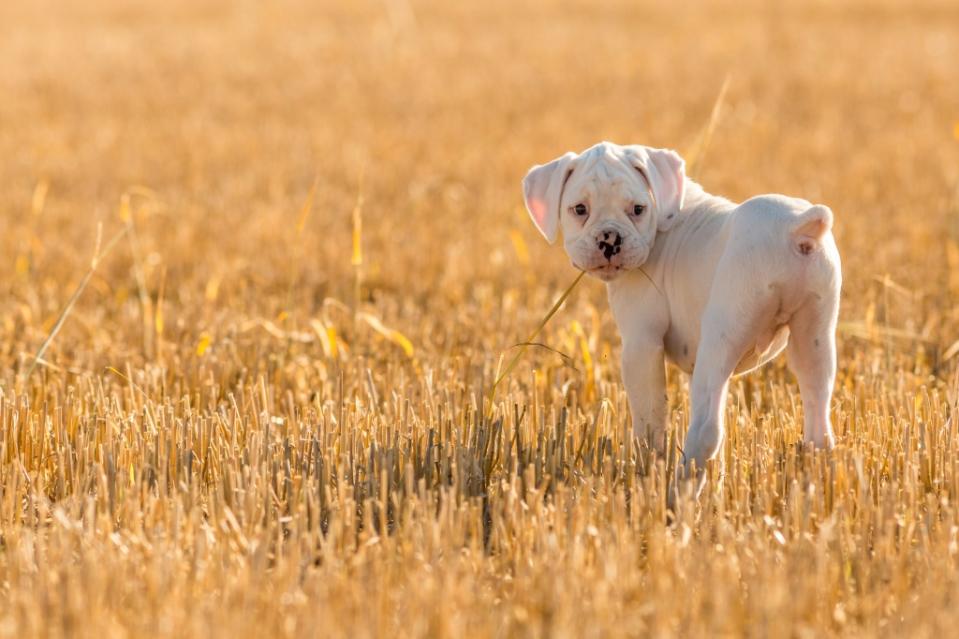
(Photo Credit: Mike Legris / Getty Images)
A Boxer puppy’s adorable smushed face is almost reason enough to bring one into your family. Boxer puppies have a jaw known as an “undershot,” which means the lower jaw curves and juts out slightly from the upper jaw. In layman’s terms, that just means your Boxer will likely have the most charming underbite ever.
They can be stubborn

Boxers puppies are energetic and intelligent. If things don’t go their way, Boxer pups may pout or insist with a couple of gentle nudges that they should get what they want. This stubbornness also can carry over into aggression. Some Boxers can get rough with dogs of the same size and sex. Be sure to socialize your Boxer pup early and often and set up expectations early to avoid too much drama.
They’re really just the sweetest, biggest couch potatoes
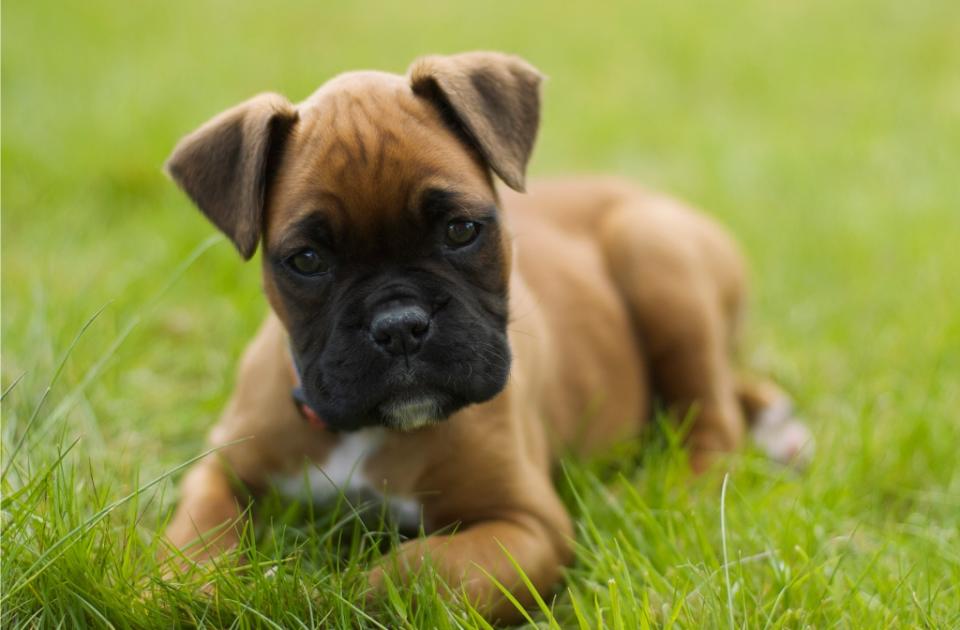
(Photo Credit: iWorks Photography / Getty Images)
There’s something that your Boxer pup will enjoy just as much as running around and playing fetch for an hour: snuggling on the couch with you as you binge-watch your favorite series.
Boxer pups are some of the world’s biggest lapdogs. Your Boxer puppy will have tons of energy, but as they age, the need for snuggles and downtime will start to balance out with the need for play.
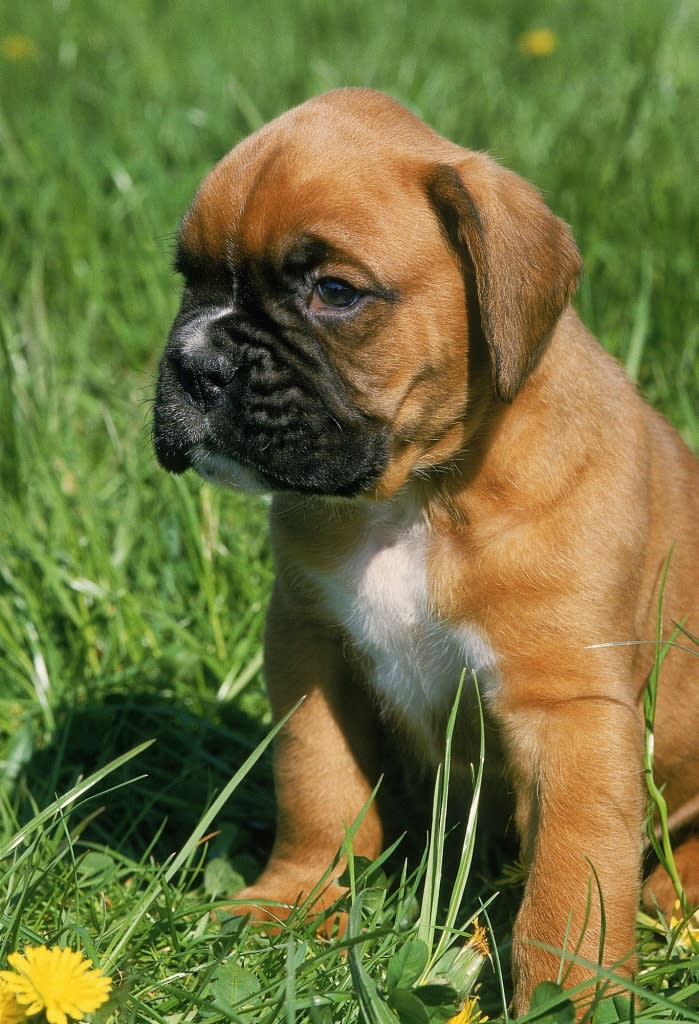
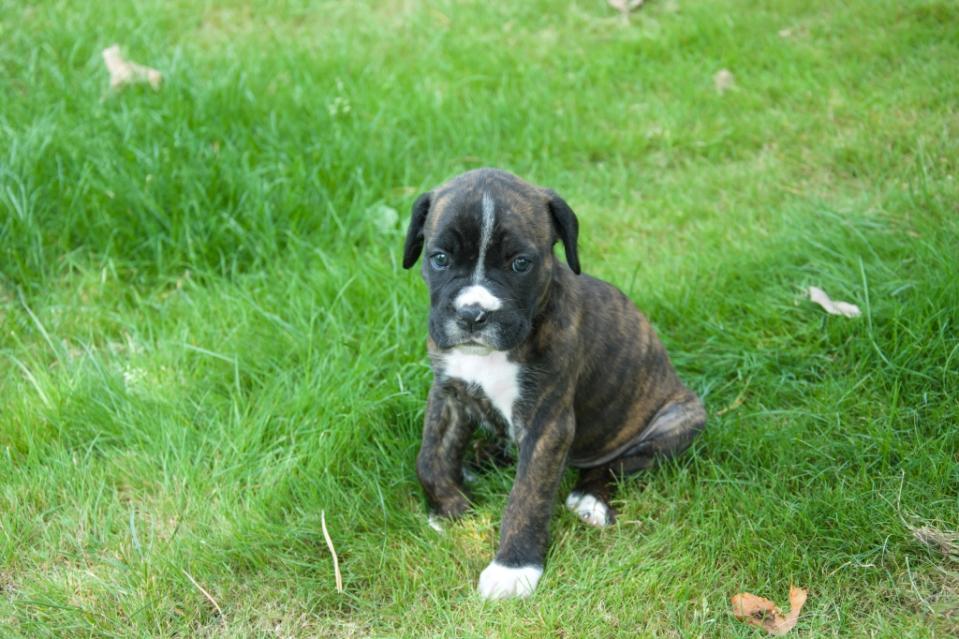
Boxer puppy sitting in grass
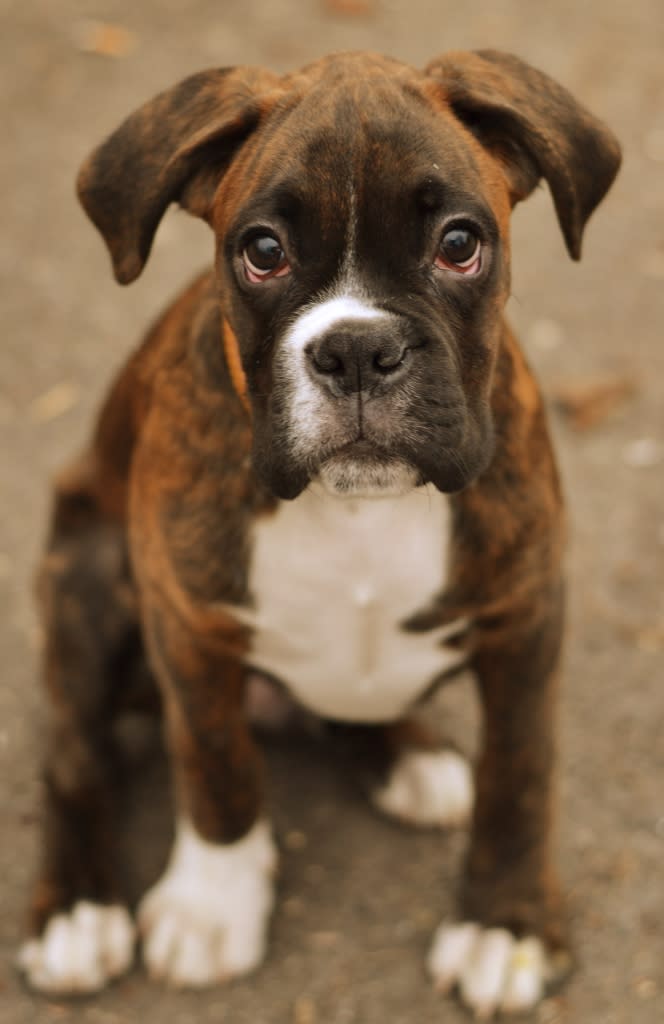
Boxer puppy looking up at camera
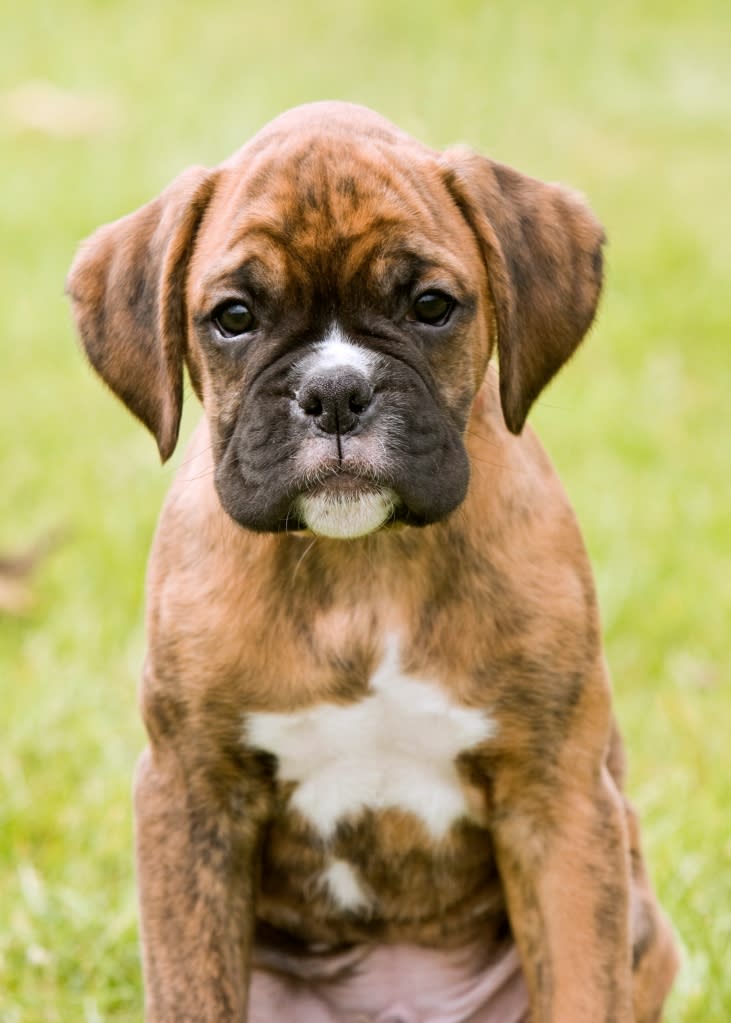
Boxer puppy looking at camera
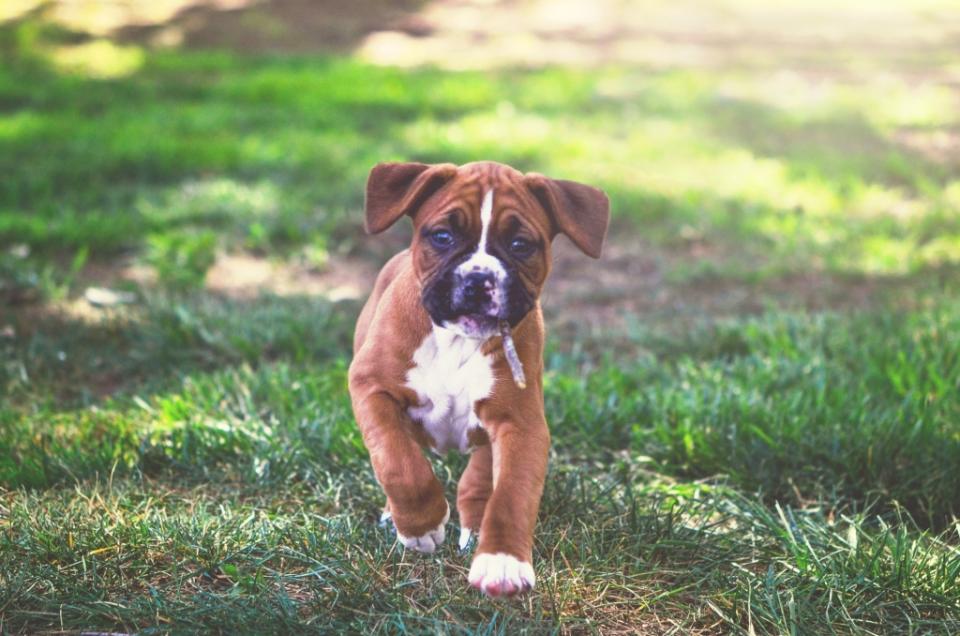
Boxer puppy running
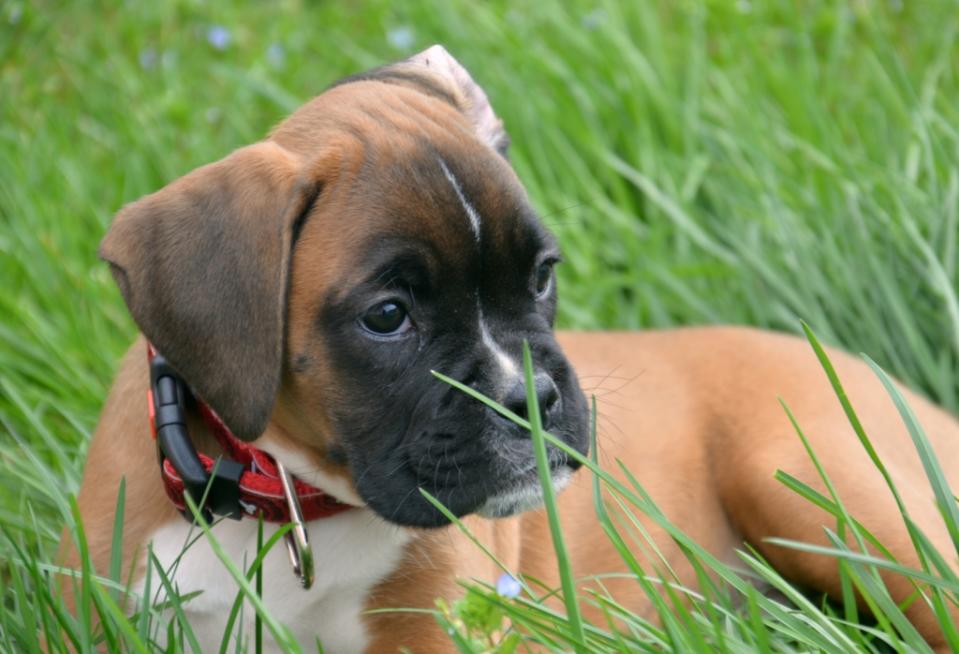
Boxer puppy lying in grass
Remember, you can find just about any breed of dog you’re looking for, including Boxers, at a shelter or rescue.
The post Boxer Puppies: Cute Pictures and Facts appeared first on DogTime.
Boxers are one of the UK’s most popular breeds, but how much do you actually know about the cute and loyal dog?
The last few years have seen many of us welcome a new four-legged friend into our homes, as the Kennel Club has seen dog ownership soar to record levels.
But with 221 different breeds of pedigree dog to choose from, there’s plenty of thinking to do before you select your perfect pup.
Those with active lifestyles might want to consider a larger dog, while somebody with allergies will be looking for a hypoallergenic dog.
There’s even academic guidance to seek out, with Psychologist Stanley Coren’s book ‘The Intelligence of Dogs’ ranking breeds by instincts, obedience, and the ability to adapt.
One dog that often appears at the top of people’s canine wishlists is the Boxer – they are one of the UK’s most popular breeds and have a range of positive attributes that make them a great family pet.
Here are 10 fun and interesting facts about the Boxer.

A versatile breed
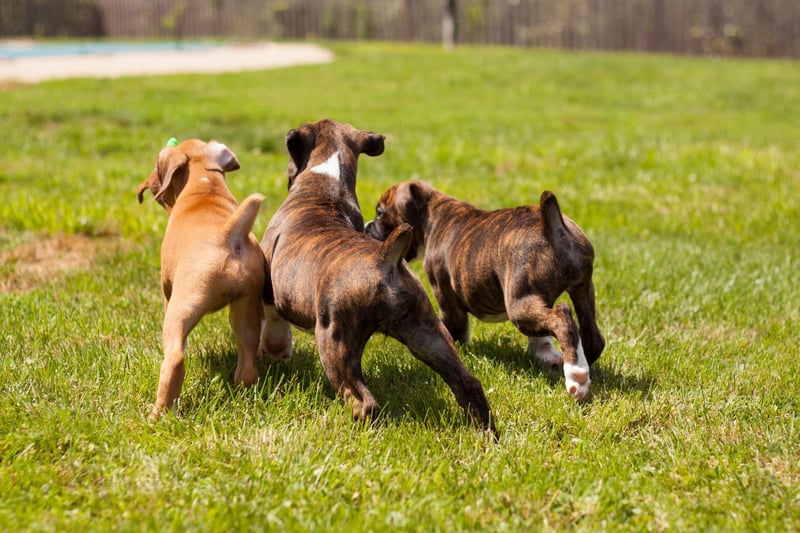
Boxers have been used for a whole range of jobs, thanks to their intelligence and versatility, including as service dogs, guide dogs for the blind, therapy dogs, police dogs and even to herd cattle or sheep. Photo: Canva/Getty Images
The choice of movie stars
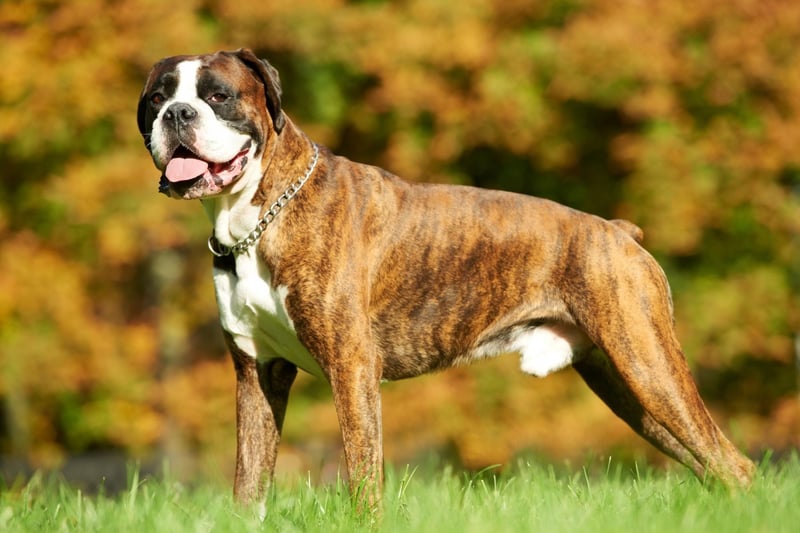
Humphrey Bogart and Lauren Bacall both loved Boxers and recieved their first, called Harvey, as a wedding present. They would go on to have two more Boxers, named Baby and George. Photo: Canva/Getty Images
In the club
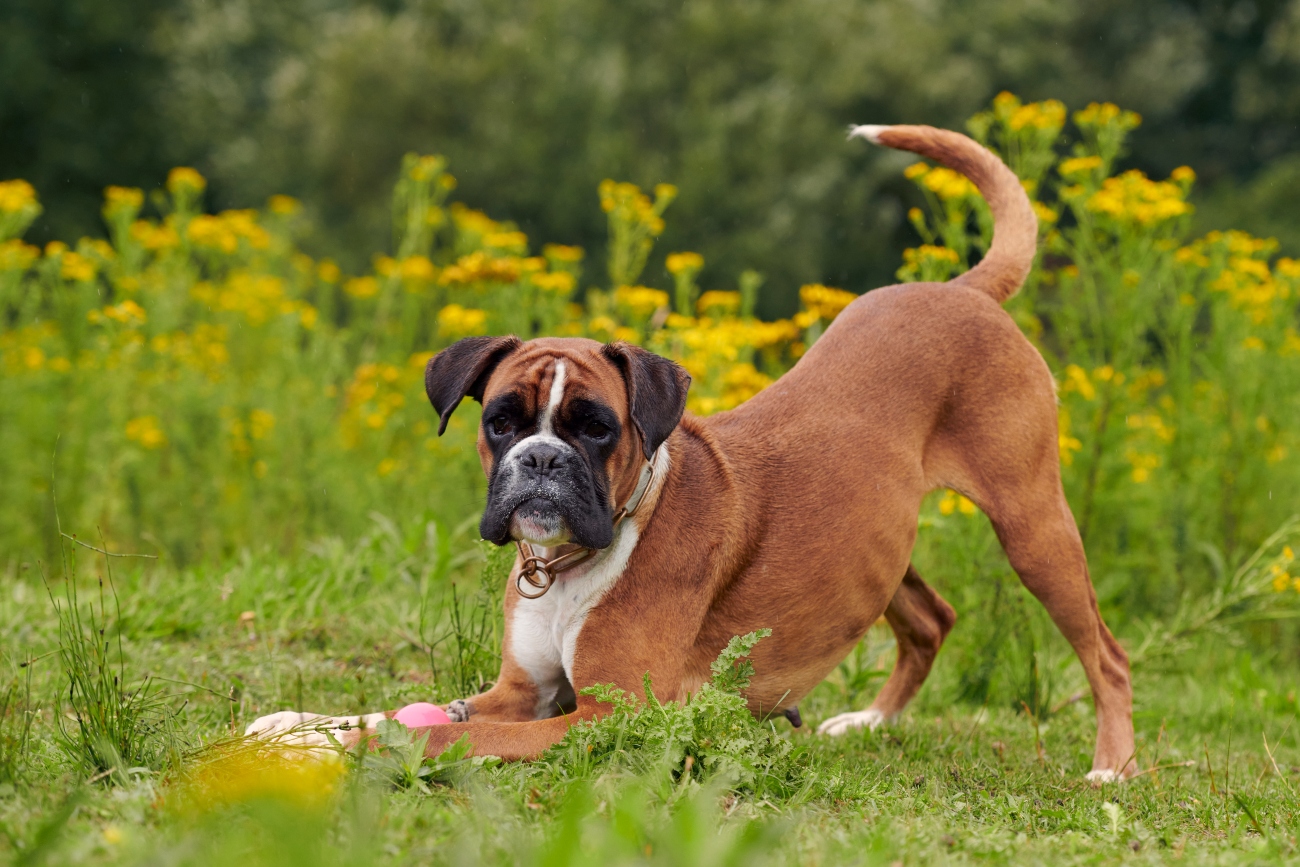
Show dogs
A Boxer has never been awarded the Best in Show rosette at Crufts but has had more luck on the other side of the Atlantic. The breed has been victorious at the Westminster Dog Show — the most prestigious in the USA — on four occasions, in 1947, 1949, 1951, and 1970. Photo: Canva/Getty Images
Are you a proud pet parent of a Boxer dog, or simply just a curious dog enthusiast? Have you ever wondered why Boxer dogs are called Boxers?
Despite the breed’s popularity, many people are still unaware of the origins of this unique name.
In this article, we will explore the history of the Boxer breed, early references to the name "Boxer," theories on why they are called Boxers, the role of their physical characteristics, and their popularity and nickname evolution.
Introduction to the Boxer breed
Boxer dogs are a popular, athletic breed known for being highly intelligent and extremely athletic.
These dogs have a muscular build, with a short and shiny coat that comes in a variety of colours, most common being a white, brindle, or fawn colour. One distinct feature of boxer dogs is their white markings, which can be found on their chest, paws, and face.
Boxer dogs are loyal and loving companions, making them great pets for families or individuals who are looking for a furry friend. In addition to their friendly personalities, boxer dogs are also quite intelligent. They are quick learners and respond well to positive reinforcement training techniques.
Boxer dogs were originally bred as working dogs, and their athleticism and energy make them great candidates for activities like agility training, running, and hiking.
However, their high energy levels also mean that they require a lot of exercise and mental stimulation to stay happy and healthy.
Overall, boxer dogs make great pets for active individuals or families who are committed to providing them with the attention and exercise they need. With their intelligence, athleticism, and affectionate personalities, it is no wonder that boxer dogs are a beloved breed among dog owners.
History of the Boxer breed
The Boxer breed originated in Germany in the 19th century. Known as a ‘Deutscher Boxer’, they were originally bred for bull-baiting, a cruel sport that was popular at the time.
After bull-baiting was outlawed, the boxer dog was used as a hunting dog or guard dog. They quickly became popular in Germany and were brought to America in the early 1900s, giving us the American boxer.
Today, Boxers are one of the most popular breeds in the world, known for their loyalty, intelligence, and playful nature.
German Boxer vs American Boxer
German Deutscher Boxer
Muscular buildPowerful legsLong muzzleMore compactStockier buildShorter muzzle
Has a brindle or fawn coat with black markingsWider range of colours including white, black and brown
Known for being balanced and calmKnown for their friendly and playful nature
Early references to the name "Boxer"
The name "Boxer" was first used in the mid-19th century to describe a type of dog that was used for bull-baiting. However, it is unclear where the name originated from.
Some theories suggest that it comes from the German word "boxl," which means "short pants." This could be a reference to the Boxer’s short, tight-fitting coat.
Other theories suggest that the name comes from the breed’s tendency to stand on their hind legs and "box" with their front paws, or from their ability to "box" their prey.
Theories on why Boxer dogs are called Boxers
There are several theories on why Boxer dogs are called Boxers:
The role of the Boxer’s physical characteristics in the name
The Boxer’s physical characteristics may have played a significant role in the name. Boxers have a distinctive look that includes a short haired coat, a muscular build, and a broad, flat face with open nostrils.
These features make them instantly recognizable and have helped to make them one of the most popular breeds in the world. Their coat, in particular, may have contributed to the name "Boxer." The coat is short and tight-fitting, resembling a pair of shorts or "boxers."
The Boxer’s reputation as a fighting breed
The Boxer’s reputation as a fighting breed may have also contributed to the name. Boxers were originally bred for bull-baiting, a cruel sport that involved setting dogs on a bull and watching them fight.
After bull-baiting was outlawed, Boxers were used for other types of fighting, including dogfighting. Although dogfighting is illegal today, the Boxer’s fighting heritage may have helped to cement their name.
Influences from other languages and cultures
Another theory on the origin of the name "Boxer" is that it comes from other languages and cultures.
For example, in French, the word "boxer" means "to fight." This could be a reference to the Boxer’s fighting heritage.
In Italian, the word "boxer" means "boxer shorts," which could be a reference to the dog’s short, tight-fitting coat.
Other languages and cultures may have also contributed to the name in other ways.
Boxer’s in the workplace
The boxer dog has been known to be one of the most versatile dog breeds, and their intelligence and loyalty make them excellent candidates for working roles. In fact, many boxer dogs have been used in military and police operations around the world.
With their muscular build and powerful jaws, they make for a formidable sight to any potential threat.
Military Dogs
Boxer dogs have been deployed for military work as scout dogs, tracking dogs, and even as bomb detection dogs. Their keen sense of smell and incredible endurance make them ideal for these roles.
The boxer’s loyalty to their handler also makes them an excellent partner for these high-stress operations, as they are willing to put themselves in harm’s way to protect their human companion.
Police Dogs
Similarly, police forces around the world have also utilized boxer dogs in various roles. They have been used as patrol dogs, sniffing out drugs and other contraband. They have also been trained to help apprehend suspects and even to provide emotional support to victims of crime.
The intelligence and quick learning abilities of these dogs make them a great choice for any police work.
Guide Dogs
Boxer dogs are known for their loyalty, intelligence, and protective nature. These traits make them excellent service dogs. Boxers can be trained to assist people with disabilities, such as those who are blind or deaf.
They can be trained to alert their owners to certain medical conditions, such as seizures or low blood sugar levels.
Their intelligence, loyalty, and strength make them ideal for military and police operations. It is no surprise that they are considered one of the most versatile dog breeds around, and their contributions in these fields are a testament to their incredible capabilities.
The Boxer’s popularity and nickname evolution
Over time, the Boxer’s popularity has grown, and their nickname has evolved.
Today, Boxers are known by many different names, including:
These nicknames reflect the Boxer’s playful, loyal nature and their popularity as a family pet.
Famous Boxer dogs and their impact through history
Boxers have played a significant role in history and popular culture. For example, in World War I, Boxers were used as messenger dogs and guard dogs. They were also used by the military in World War II.
In popular culture, Boxers have been featured in movies, television shows, and books. Some famous Boxers include:
Boxer dogs in pop culture
Boxers have been a popular breed in pop culture for many years. They have been featured in movies, television shows, and books.
Some of the most popular movies featuring Boxers include:
In television, Boxers have been featured on shows like:
In literature, Boxers have been featured in books like "Marley & Me" and "The Dog Who Wouldn’t Be."
Boxer dog myths and misconceptions
Despite their popularity, Boxers are still subject to myths and misconceptions.
One of the most common myths is that Boxers are aggressive dogs. In reality, Boxers are not aggressive by nature and are actually quite friendly and playful.
Another misconception is that Boxers are not good with children. Again, this is not true, and Boxers are actually great with kids. It is important to do your research before adopting any breed of dog to ensure that they are a good fit for your family.
Common health problems for the boxer dog
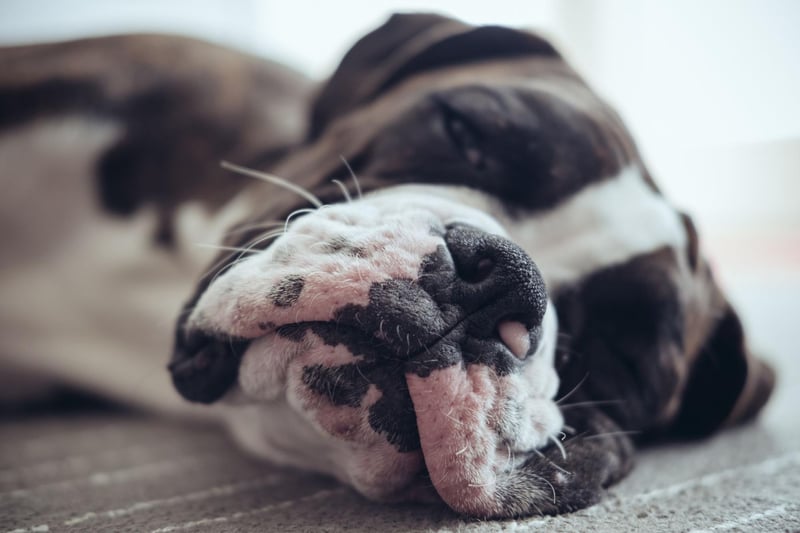
Like all other breeds, they are also prone to certain health problems that can affect their quality of life.
Despite these health challenges, with proper care and attention, a boxer dog can live a happy and healthy life. Regular exercise, a balanced diet, and regular veterinary check-ups can help prevent or manage many of these health issues, and you could find your boxer meeting the average life expectancy of 10-12 years.
Conclusion
In conclusion, the origins of the name "Boxer" are still a mystery.
However, there are several theories on why Boxer dogs are called Boxers. The Boxer’s physical characteristics, fighting heritage, and influences from other languages and cultures may have all played a role in the name.
Despite the mystery surrounding their name, Boxers are a beloved breed that has played a significant role in history and popular culture. If you are considering adopting a Boxer, be sure to do your research and find the perfect furry friend for your family.
To get a boxer dog insurance quote for your furry friend you can get a quote through our website by clicking here. If you would like to talk to one of our pet insurance team, you can get in touch with us on 0330 102 5748.
There are so many reasons to fall in love with a Boxer. Consider that powerful body, expressive face, clownish sense of humor, innate intelligence, and intense attachment to their owners.
If you haven’t fallen in love yet, some of these interesting Boxer facts may do the trick. Even seasoned Boxer owners may learn a few surprising things about their beloved breed.
Boxers Have a Long History
Along with their cousins, the Bulldog and Mastiff, Boxers have ancestors that can be traced to the ancient Assyrians, as long ago as 2000 BC. They were powerful, brave dogs, often used in war. Centuries later, these dogs were named for the ancient city of Molossis (in what is now Albania).
For centuries, the Bullenbeisser, the Boxer’s more recent ancestor, was used as a hunting dog for wild boar, bear, and deer. The breed spread all over continental Europe and England and can be seen in Flemish tapestries from the 16th century. Most experts agree that this smaller Bullenbeisser, from northeast Belgium, is the direct ancestor of the modern Boxer. However, it was in Germany that the breed developed into the remarkable dog we know today.
Boxers Were Relatively Late Arrivals to America
The Boxer, as we know the breed today, was first imported to the U.S. after World War I. But these dogs didn’t reach any real degree of popularity until the late 1930s. Four dogs, in particular, are considered the foundation of the American Boxer. They’ve even been nicknamed “the Four Horsemen of Boxerdom.” The first was Sigurd, born in Germany in 1929. Ten of his puppies were imported to America and became champions or were the ancestors of champions. The next two were Lustig and Utz, and each sired dozens of champions. Lustig sired 41 American champions, and Utz sired 35. The last of the four was Dorian, and he won the Working Group at Westminster in 1937.
They Have Excelled in Dog Shows
The breed has won Best in Show at the Westminster Kennel Club Dog Show four times, in 1947, 1949, 1951, and 1970.
The Boxer Has a Mind of Their Own
When racing the agility course, performing in AKC Rally, or strutting their stuff in obedience, the Boxer can be absolutely glorious. But this extremely intelligent dog has a mind of their own.
As their trainer, you must be patient, consistent, and creative. A Boxer becomes bored with repetition and may, given their sense of humor, invent their own idea of obedience or agility during training.
Boxers Are Lovers, Not Fighters
In spite of their heritage as powerful and courageous hunters, one of the modern breed’s most appealing traits is a tremendous love for their owners and a need to be loved in return. A Boxer is happiest when they’re with their family, especially children. They are protective and patient with kids and make an ideal family dog.
They Have Their Own Distinct Antics
When excited, which is every time they greet a beloved human, they are known for jumping up and down in exuberance and leaping about. “Down” may be the first command to teach them. And almost any lover of the breed can tell you about the “kidney bean” dance Boxers do. They twist their bodies into a sort of semicircle and, in their excitement, start turning in circles.
Boxers Make Excellent Service Dogs
With their innate attachment to humans and their intelligence, Boxers can be wonderful service dogs. They are often used as guide dogs for the blind and even as alert dogs for people who suffer from epilepsy, alerting them to an imminent seizure.
A Pair of Movie Stars Loved Boxers
Humphrey Bogart and Lauren Bacall were both dog lovers. They received their first Boxer, Harvey, as a wedding gift, and he appeared in many of their publicity photos. They acquired two more Boxers, Baby and George, as well.